
Cleaning SILGRANIT granite sinks: what to look out for
Silgranit sinks are extremely hard and resistant. This means that looking after them is really very simple. Nevertheless, when cleaning a granite sink made of Silgranit you should be aware of a few things in order to keep enjoying the fantastic look and feel for as long as possible. This care guide provides advice on how best to clean Silgranit, from daily care to deep cleaning and removing stains.
The advantages of a Silgranit sink
Silgranit sinks from BLANCO represent the advancement of the classic granite sink. The special composite material is 80 % made from the hardest component of granite, making our sinks particularly resistant. This makes it almost impossible for dirt to adhere to the surface.
The fantastic feel is another asset. Thanks to granite’s high density, Silgranit sinks feel particularly smooth and soft. Silgranit sinks are extremely easy to look after, while the surface reduces bacterial growth by an average of 98% thanks to the hygiene protection formula. What’s more, the sinks are available in lots of different colours, with the material dyed right the way through. This means that slight kinks or staining foods will not cause any changes to the colour of your silgranit sink. Only limescale deposits many lead to discolouration, but these can be removed in next to no time.
BLANCO Silgranit sinks are the perfect combination of design and colour, durability and easy care.
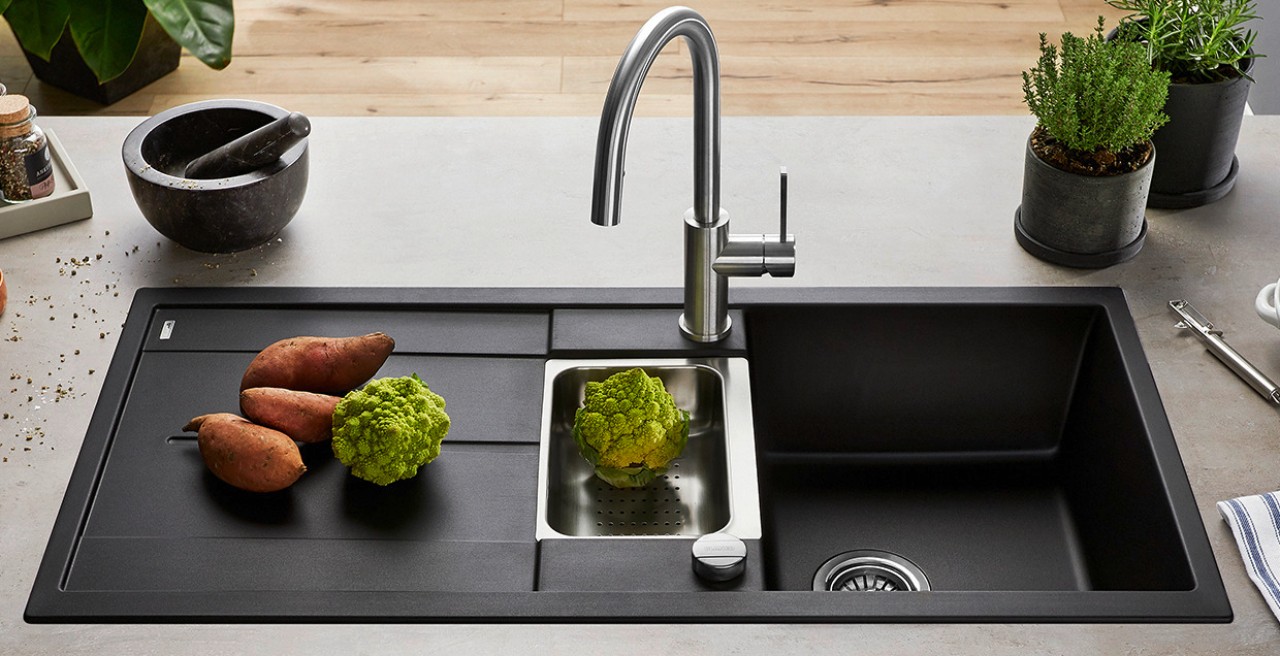
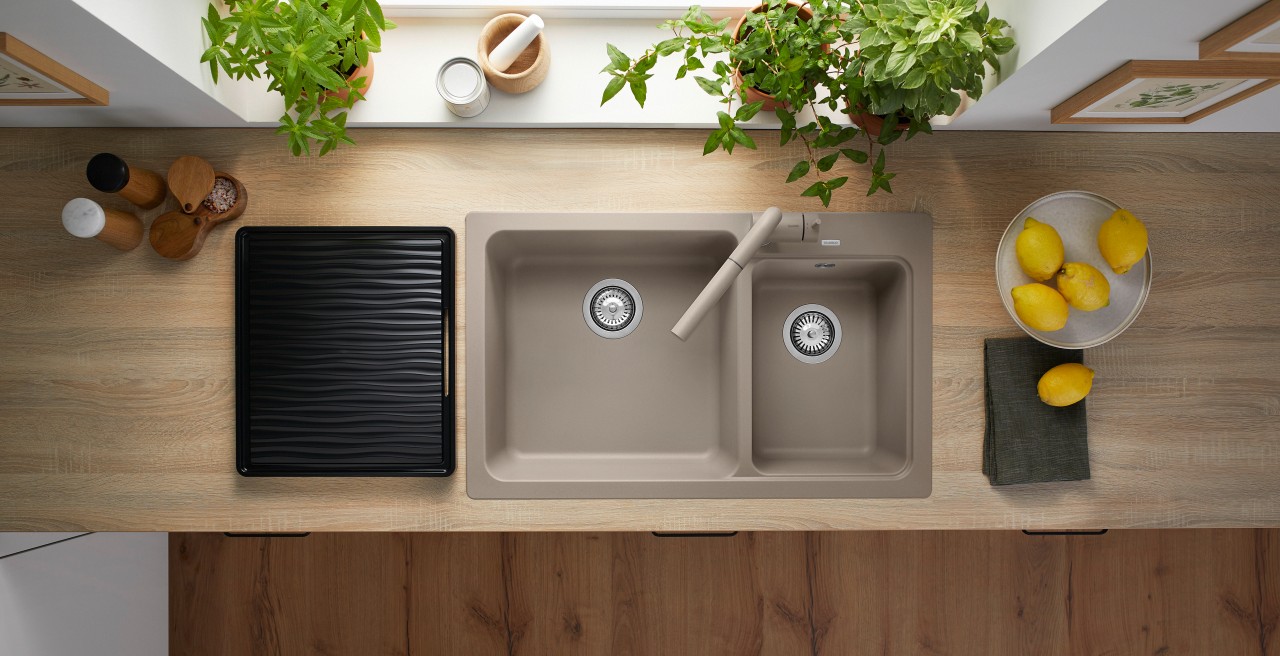
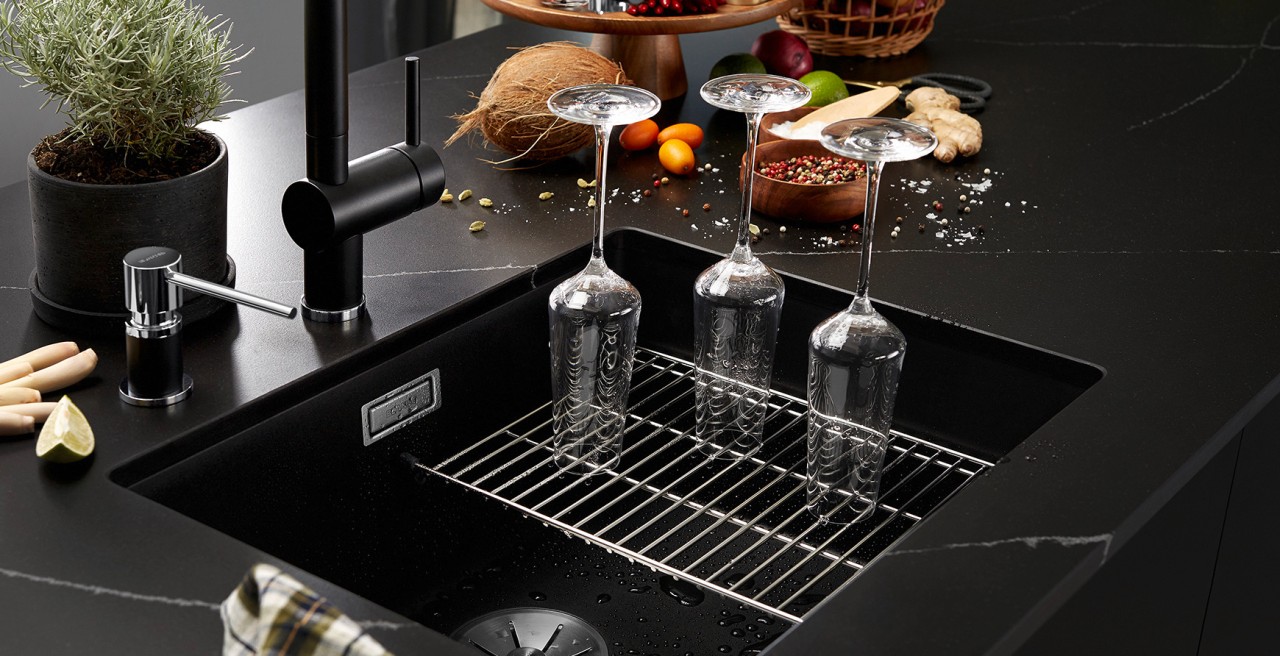
Colourful silgranite sinks
1
/
0
Do not use special cleaning agents
Although silgranite is a very durable material, there are cleaning products that you should not use to clean your granite sink. These include:
- Drain cleaners
- Cleaners containing chlorine
- Lyes or other solvents
- Abrasive cleaners
These agents are very aggressive and can cause lasting damage to your sink. Rely on BLANCO cleaning and care products. These are adapted to the material properties of Silgranit.
Daily care for your granite sink
Removing metal abrasion
Removing discolouration
Monthly deep-cleaning
Questions about the cleaning and care of SILGRANIT sinks
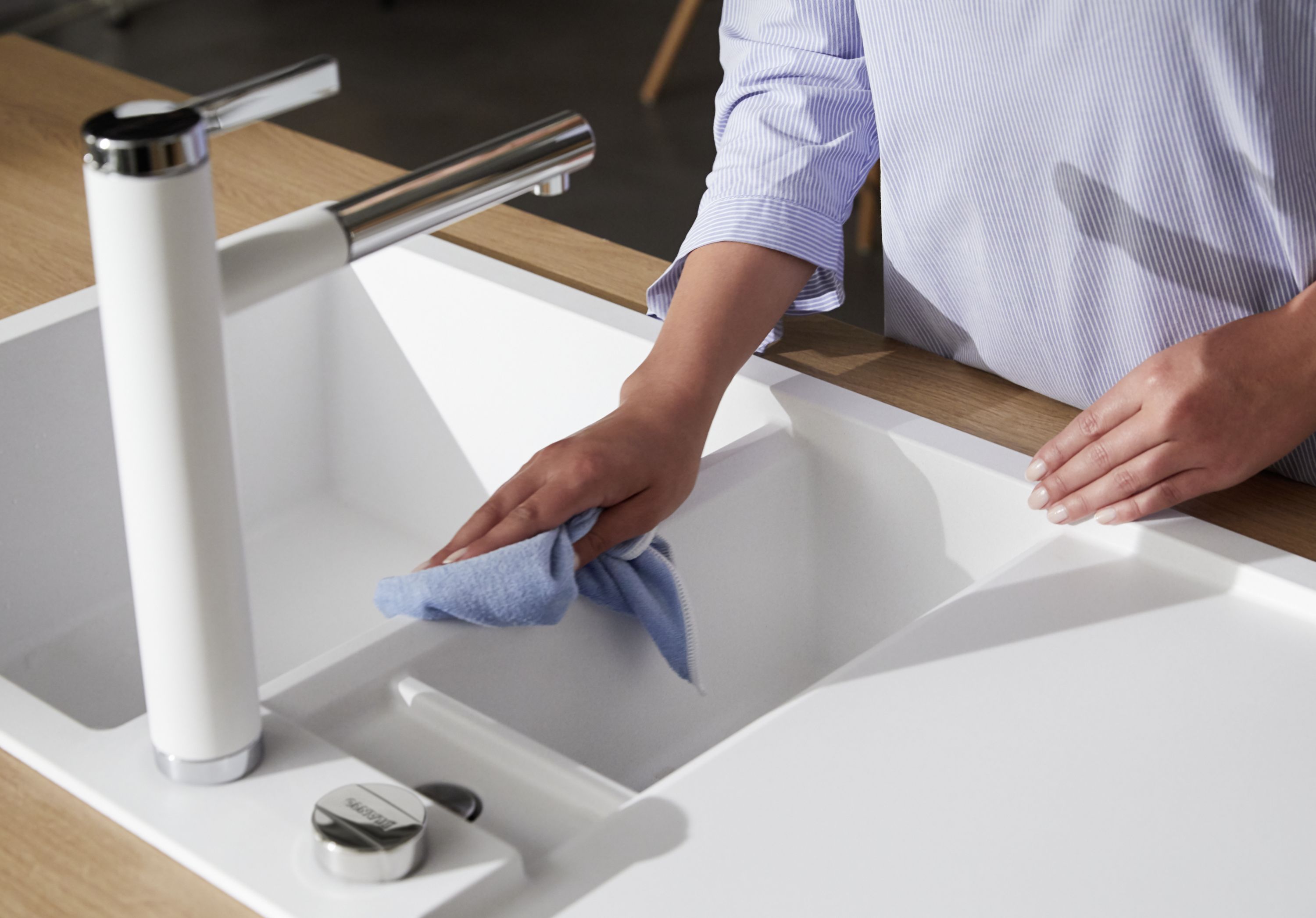
The material Silgranit is very easy to clean. This can be divided into quick daily cleaning and deep cleaning at longer intervals. In general, the following applies: With regular care, you need to clean less. For quick daily cleaning, all you need is a sponge with some dishwashing liquid. Wipe your sink clean with circular motions. Use the soft side of the sponge for this to avoid scratches. Then rinse with water and rub dry with a microfiber towel.
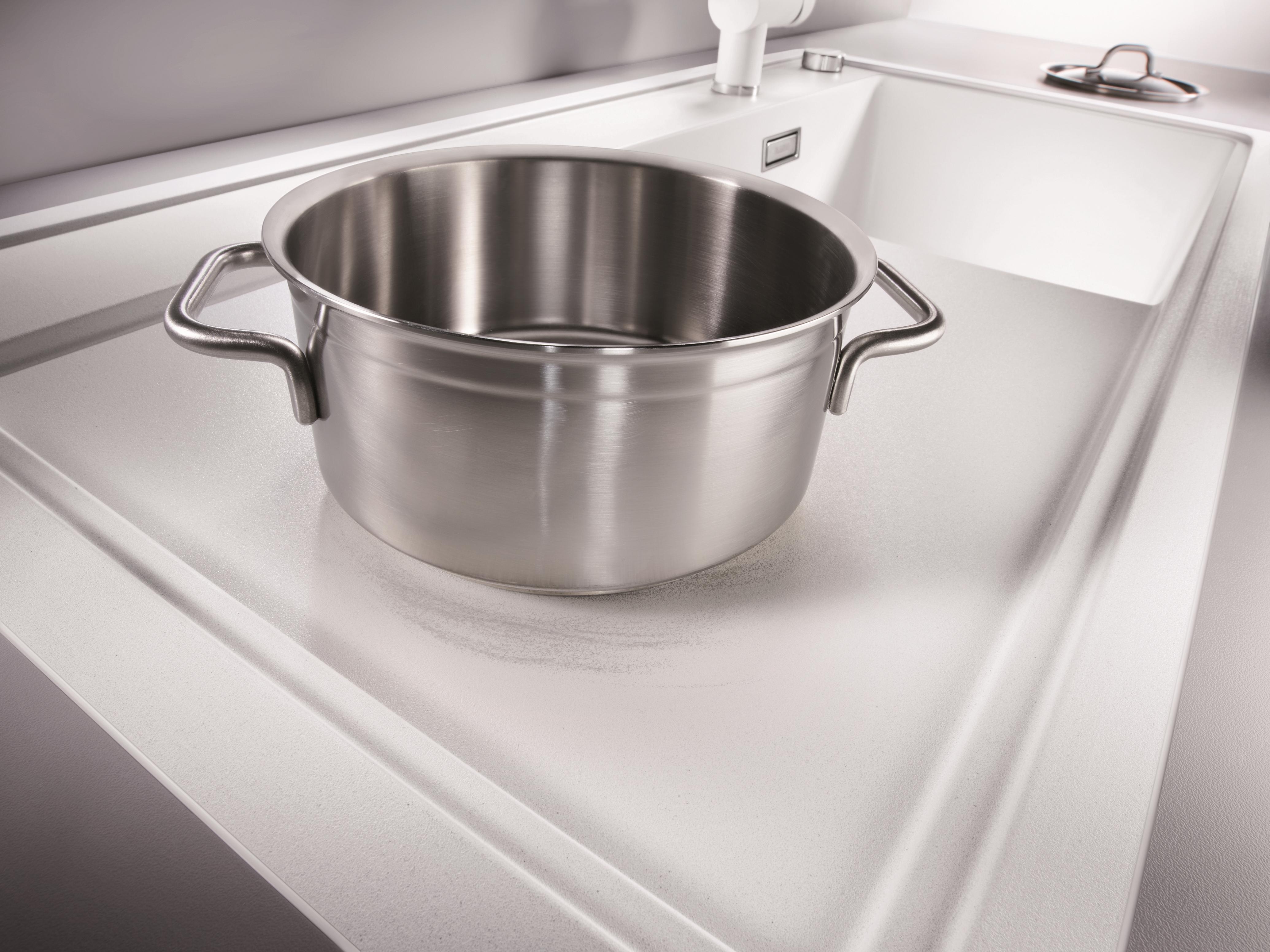
Robust and colorfast: these properties define your Silgranit sink. This makes any small dark streak that appears on your surfaces all the more noticeable. The streaks were most likely caused by metal abrasion. However, there is no need to panic: You can remove such abrasion marks in one step. After all, your sink is not only durable, but also extremely easy to clean. All you need is a non-scratch sponge (we recommend Spontex Polish, but if you don't have it, a soft sponge will do), water, cooking oil (such as sunflower or canola), and a microfiber cloth.
Steps:
- - Wet the sponge completely with water.
- - Apply oil to the soft side of the damp sponge
- - Remove the dark metal traces by making circular movements with the sponge.
- - Remove the water-oil mixture thoroughly with warm water and dry with a microfiber cloth.
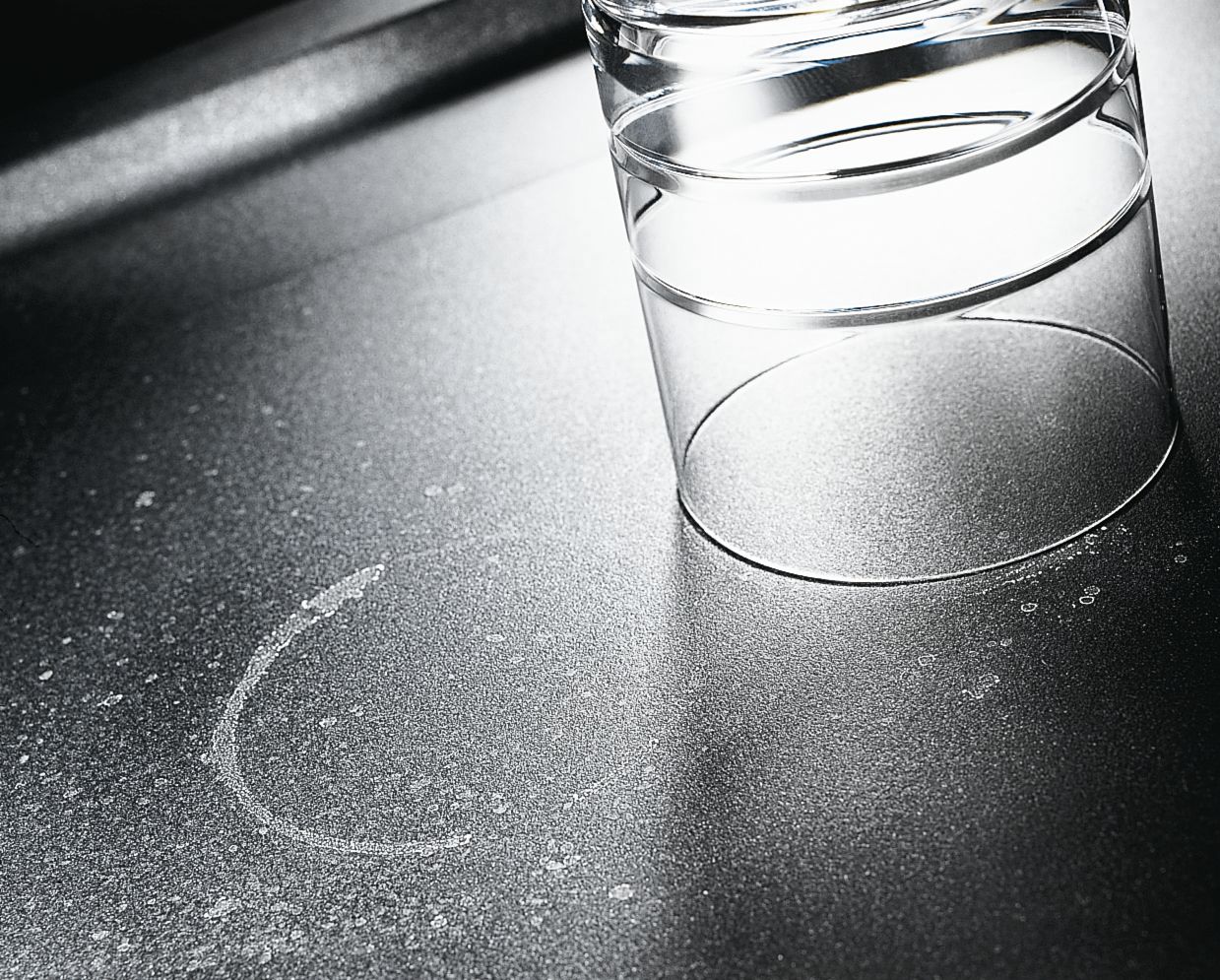
Depending on where you live and the water pipes, limescale can be quite stubborn. The unsightly water spots thus quickly become a minor blemish on your shining piece. How good that it is no trick to clean your Silgranit kitchen sink. Use citric acid, or vinegar essence. Apply the solution to the stains in the sink and let it soak for 5 minutes. Then rinse the sink generously, clean with a sponge and finally wipe dry.
From time to time, the strainer basket that keeps your sink drain clear also needs to be cleaned. This is easily done with a powdered dishwasher detergent and hot water. Close the strainer basket, prepare a mixture of dishwasher detergent and water, let it soak in and scrub. On our service page, we show you in detail how to clean your strainer basket in the FAQ section.
Whether dark discoloration or light lime stains, stains and deposits are also noticeable on dark sinks. Lime stains also often trap other liquids such as coffee, causing discoloration. However, these can be easily removed.
Important: Be sure to avoid aggressive cleaners when cleaning a silgranite sink. Strongly caustic cleaning agents or solvent-based cleaners can attack and permanently damage the surface of your sink.
Use vinegar cleaner or citric to remove limescale deposits. Apply the cleaner to the affected surfaces and let it soak in. Then clean your sink with a soft sponge and finally rinse with clear water. Rub dry with a microfiber cloth and your sink is clean again.
Stains and discolorations on Silgranit sinks are usually superficial limescale deposits that have trapped dirt. For light stains, a damp dishcloth with a little dishwashing detergent is sufficient. Rub over the stains in a circular motion. You will see: With each movement, the stain gets smaller. Rinse with a little water and rub the sink and draining board dry. Your sink is clean again. To prevent limescale from forming in the first place, which can collect dirt, rub your sink with a microfiber cloth after each use. This way, limescale can't form in the first place.
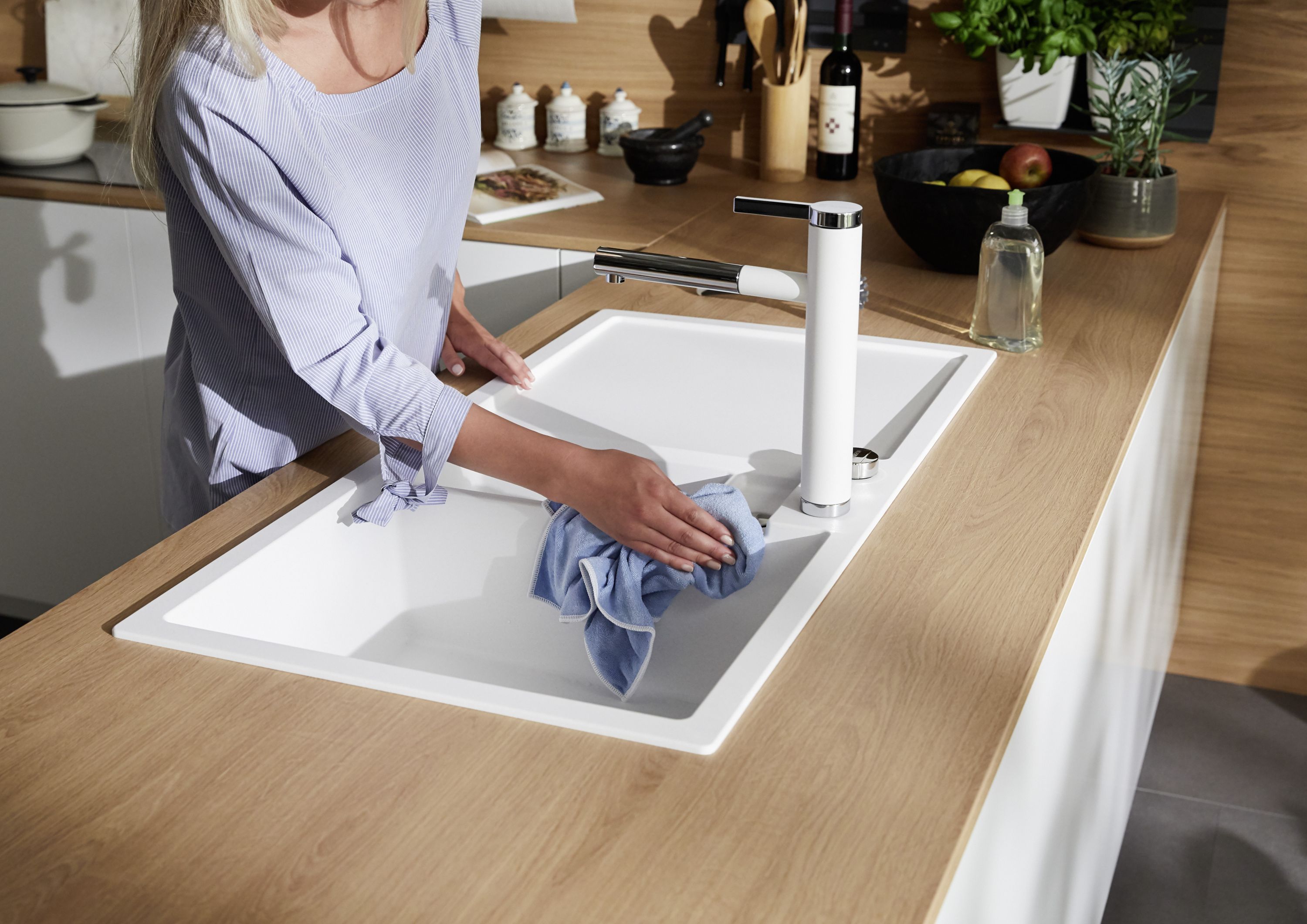
To remove stains and everyday wear and tear from your sink, all you need is a sponge, some dishwashing liquid and water. Wet the sponge under running water and take a small amount of detergent on the soft side of the sponge. Clean your sink by rubbing it with the sponge (soft side) in small, circular motions. Rinse your sink with clean water and dry it with a microfiber towel.
Use a non-aggressive acid-based cleaner (e.g. liquid cleaner with lemon or vinegar) regularly to clean your sink and remove limescale. Depending on how much lime the water in your area contains, you may need to do this cleaning weekly or less frequently if necessary. Then wipe with a damp cloth and dry with a microfiber cloth.
Once a year, or when you feel it necessary, you may want to thoroughly clean your sink. First of all, you should pay attention to remove the deposited lime. This is followed by the basic cleaning. You can use any soft detergent. To do this, close the drain of your sink. Distribute the washing powder or gel evenly in the sink and fill the sink with water that has been heated to at least 60°C. Leave it to soak for at least two hours or, ideally, overnight. Finally, drain the solution, rinse your sink with clean water and rub it dry with a microfiber towel.
No, it has not. The frequency of cleaning required does not depend on the color. However, metal stains are easier to spot on light colored sinks. On the other hand, white lime is easier to spot on dark sink colors. In any case, a quick daily cleaning routine and simple regular cleaning are all you need to keep your granite sink looking fantastic.
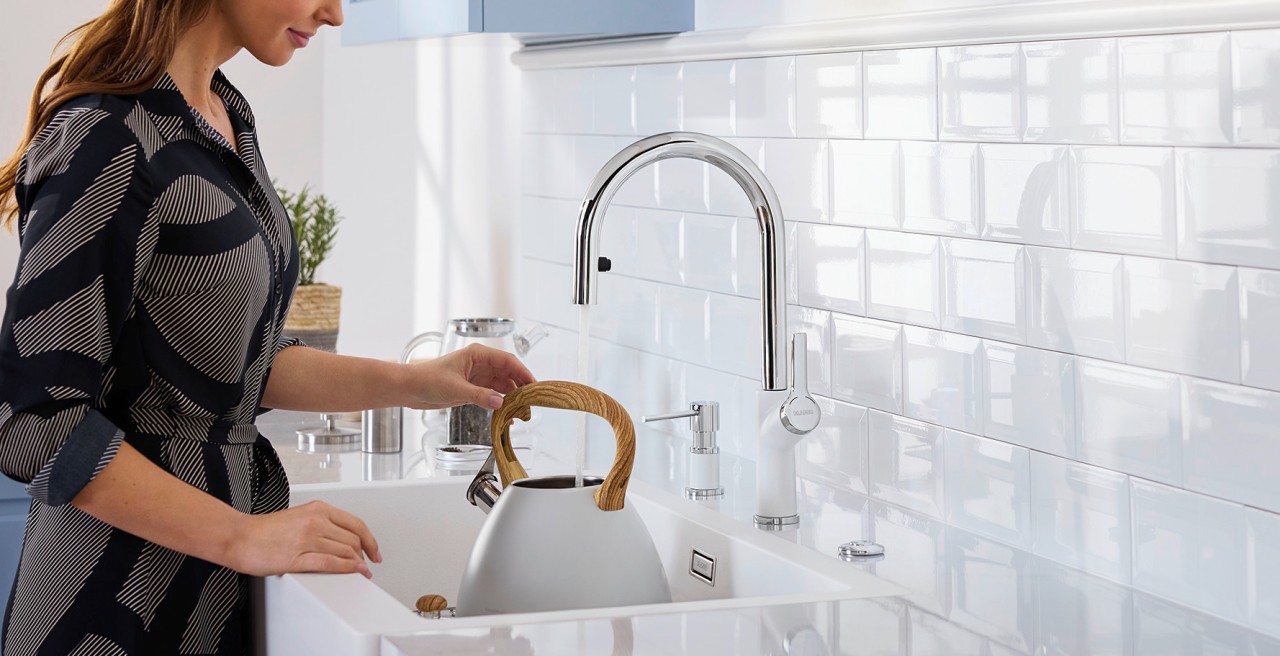
Silgranit is ready to work with a hot mixer tap. Silgranit isn’t fazed by high temperatures, so boiling water won’t be a problem. A hot mixer tap like our TAMPERA delivers water at 100°C directly out of the spout, ready to make tea or cook food. Using it correctly is important to avoid injuries or putting an excessive burden on the sink.
Here our experienced tips:
• Always place a pot or cup below the tap before activating the boiling water and turn it off in good time to avoid spills.
• Be sure to keep your hands away from the running boiling water.
• Remember that the spout might be very hot after running boiling water, so avoid touching it or run some cold water before touching it. This might be very important if you have kids at home.
• Move the spout of the tap to different positions to ensure that the boiling water doesn’t hit always the same spot on the sink or place a cloth on the bottom to avoid subjecting one point of the sink surface to too much boiling water.